




About
The Technion-Rambam Initiative in Medical AI, TERA was launched in March 2022 as a strategic joint initiative between the Technion Institute of Technology and Rambam Health Care Campus. TERA facilitates collaboration between clinicians, scientists, and engineers by translating real-world clinical challenges into applied artificial intelligence research.
Connecting researchers from both institutions, TERA serves as a facilitator, providing access to large-scale medical data, clinical expertise, dedicated infrastructure, and professional support. It enables the development, evaluation, and clinical implementation of AI-driven solutions aimed at improving patient care, clinical decision-making, and healthcare workflows.
TERA operates through a dedicated ecosystem and physical space embedded within Rambam Health Care Campus.
This space serves as a collaborative hub for researchers, clinicians, scientists, and graduate MD, MSc, and PhD students at Technion, supported by Rambam's in-house IT, clinical trial methodology, epidemiology, and medical statistics expertise.

TERA provides a privacy-secured ethical framework for working with medical data, enabling on-site analysis or access through secured cloud infrastructure. TERA facilitates an end-to-end pipeline for collecting, preparing, validating, and securely researching large-scale clinical data, and supports the regulatory and technical processes required to deploy and evaluate pilot AI systems within Rambam clinical units.
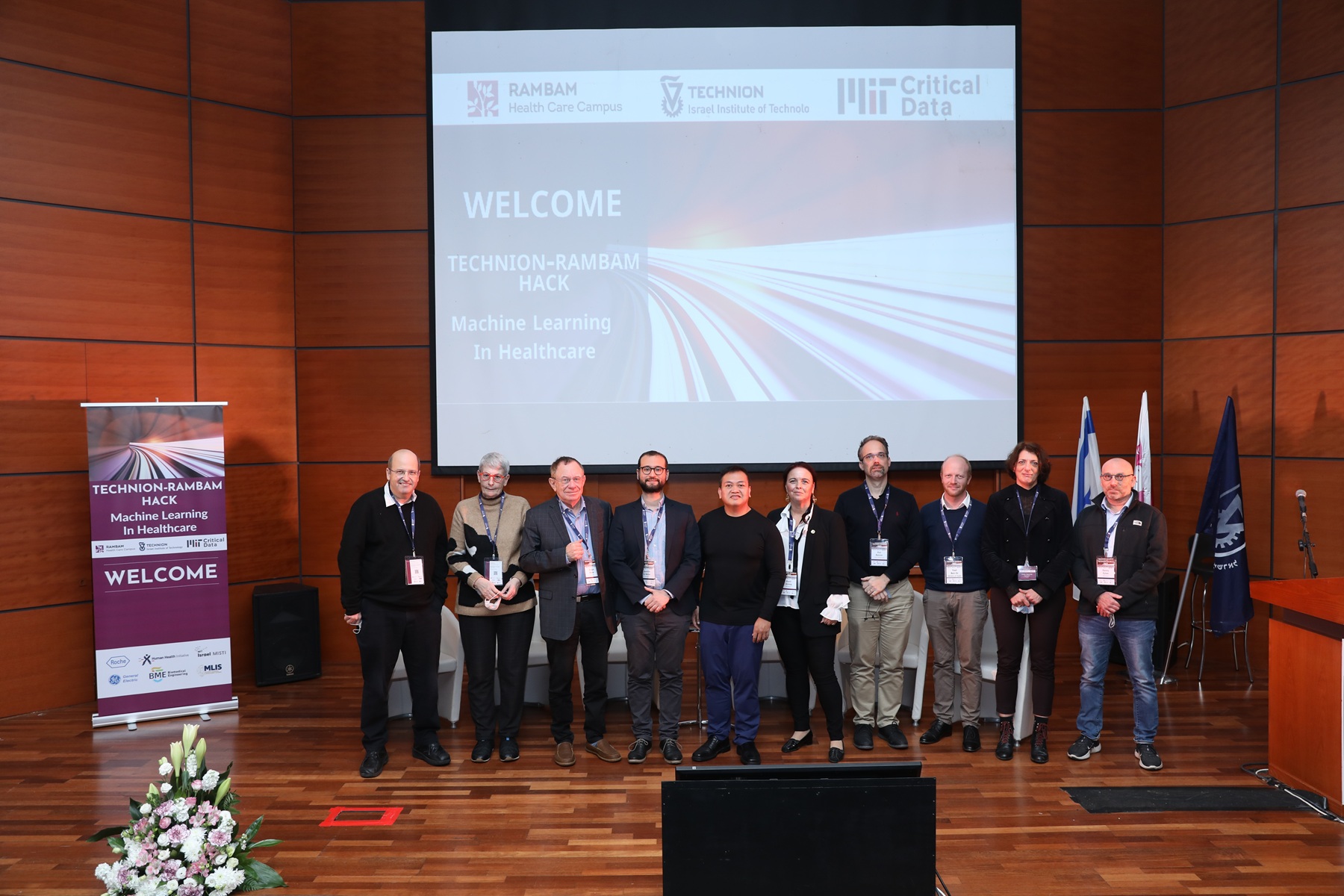
The image captured at the TERA launching event, during the Technion-Rambam Machine Learning in Healthcare Datathon, later described in BMJ Health and Care Informatics, reflects the mission in action, bringing together clinicians, data scientists, and engineers to create validated AI-driven healthcare solutions.
Sobel, J., Almog, R., Celi, L., Yablowitz, M., Eytan, D., & Behar, J. (2023). How to organise a datathon for bridging between data science and healthcare? Insights from the Technion-Rambam machine learning in healthcare datathon event. BMJ health & care informatics, 30(1), e100736. https://doi.org/10.1136/bmjhci-2023-100736