



A Wearable Kinematics and Machine learning Approach for Rebalancing Knee Loads
PI-Technion, Assist. Prof. Arielle Fischer, PI-Rambam, Dr. Bezalel Peskin, MD, Research Team Assoc. Prof. Kfir Yehuda Levy, Technion, Dr. Nabil Ghrayeb, MD, Rambam
Objectives and clinical need A major challenge after unilateral total knee arthroplasty is persistent gait asymmetry that increases loading on the non operated knee, accelerating osteoarthritis progression and raising the likelihood of contralateral surgery. Current rehabilitation workflows rarely quantify knee loading outside the lab, limiting the ability to detect harmful patterns early or track progress during real world walking. This project aims to enable accurate wearable estimation of knee loading metrics to support monitoring, feedback, and rehabilitation strategies that reduce harmful asymmetries and improve long term outcomes.
Databases and cohorts
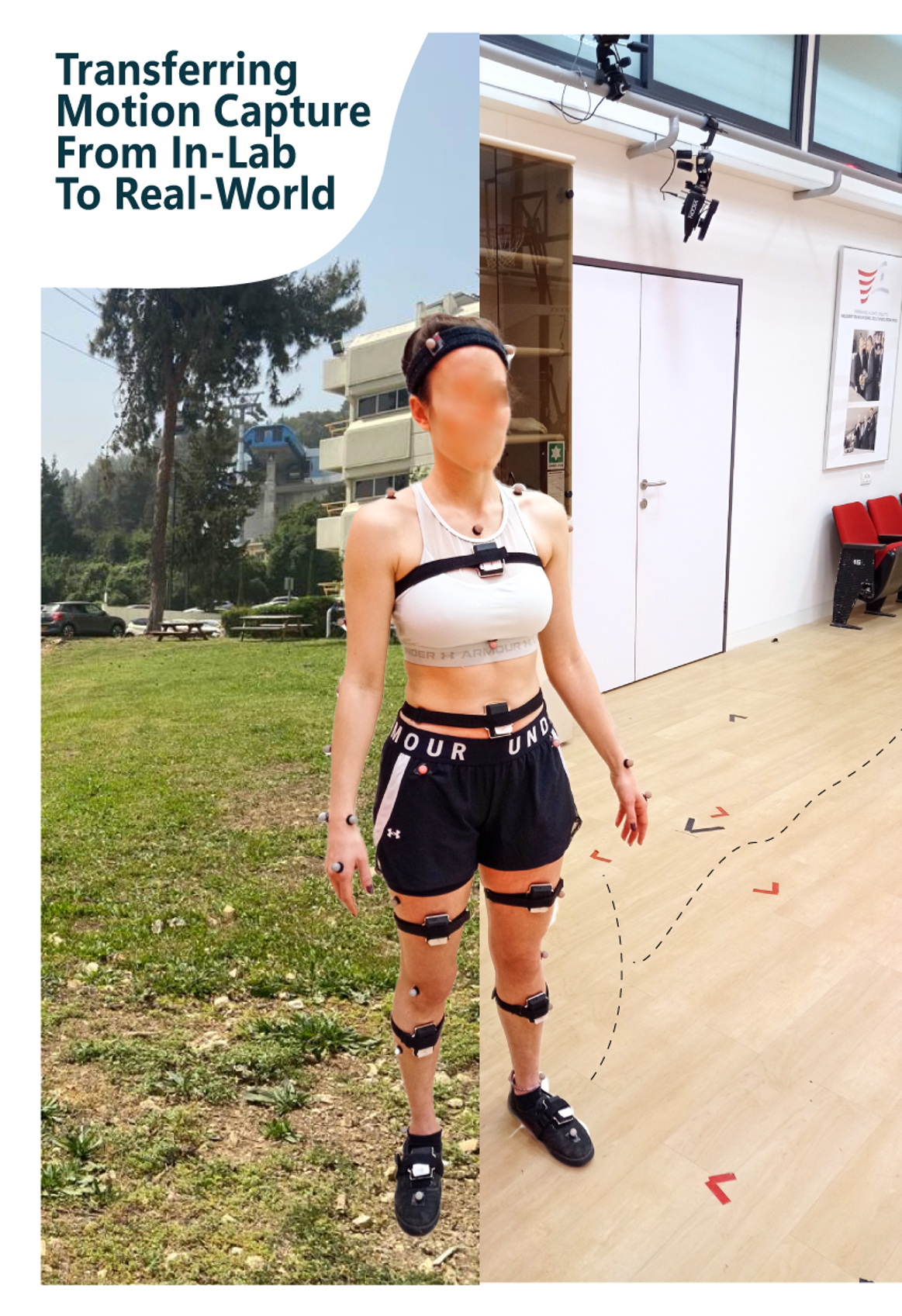
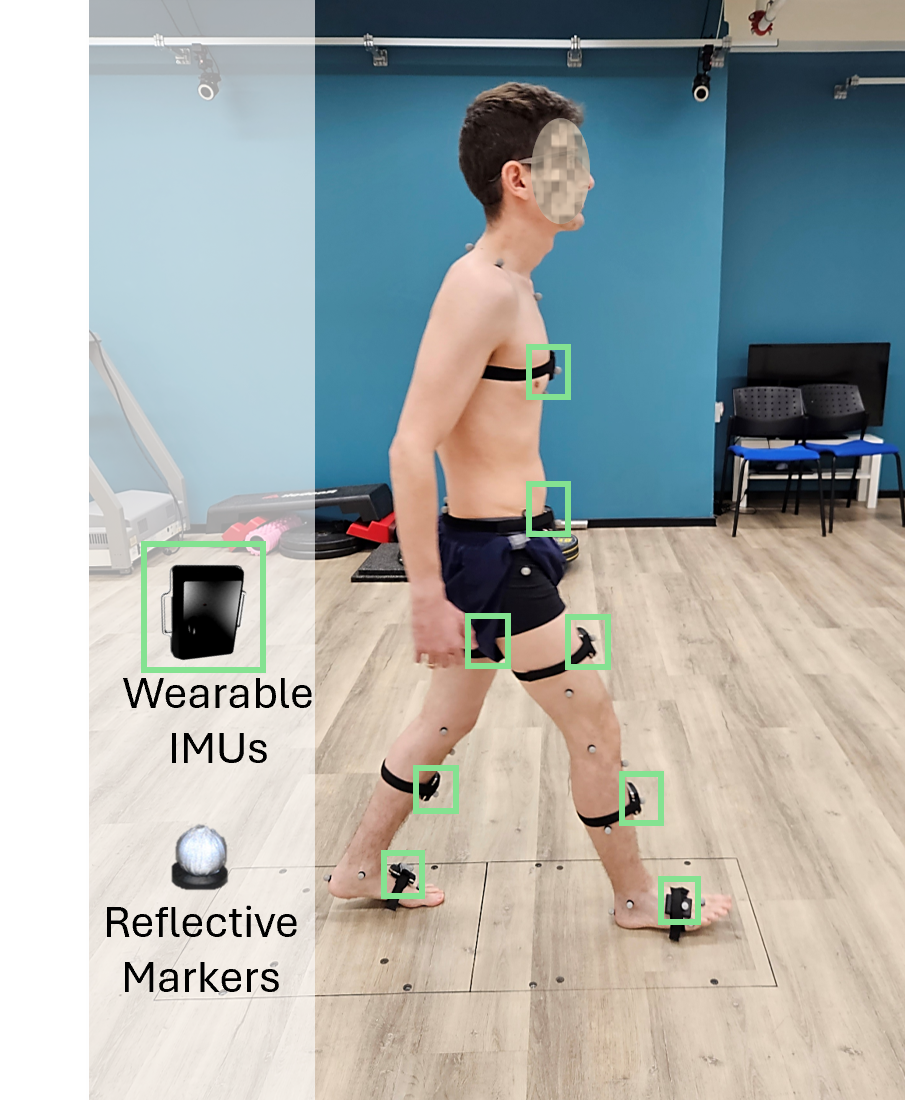
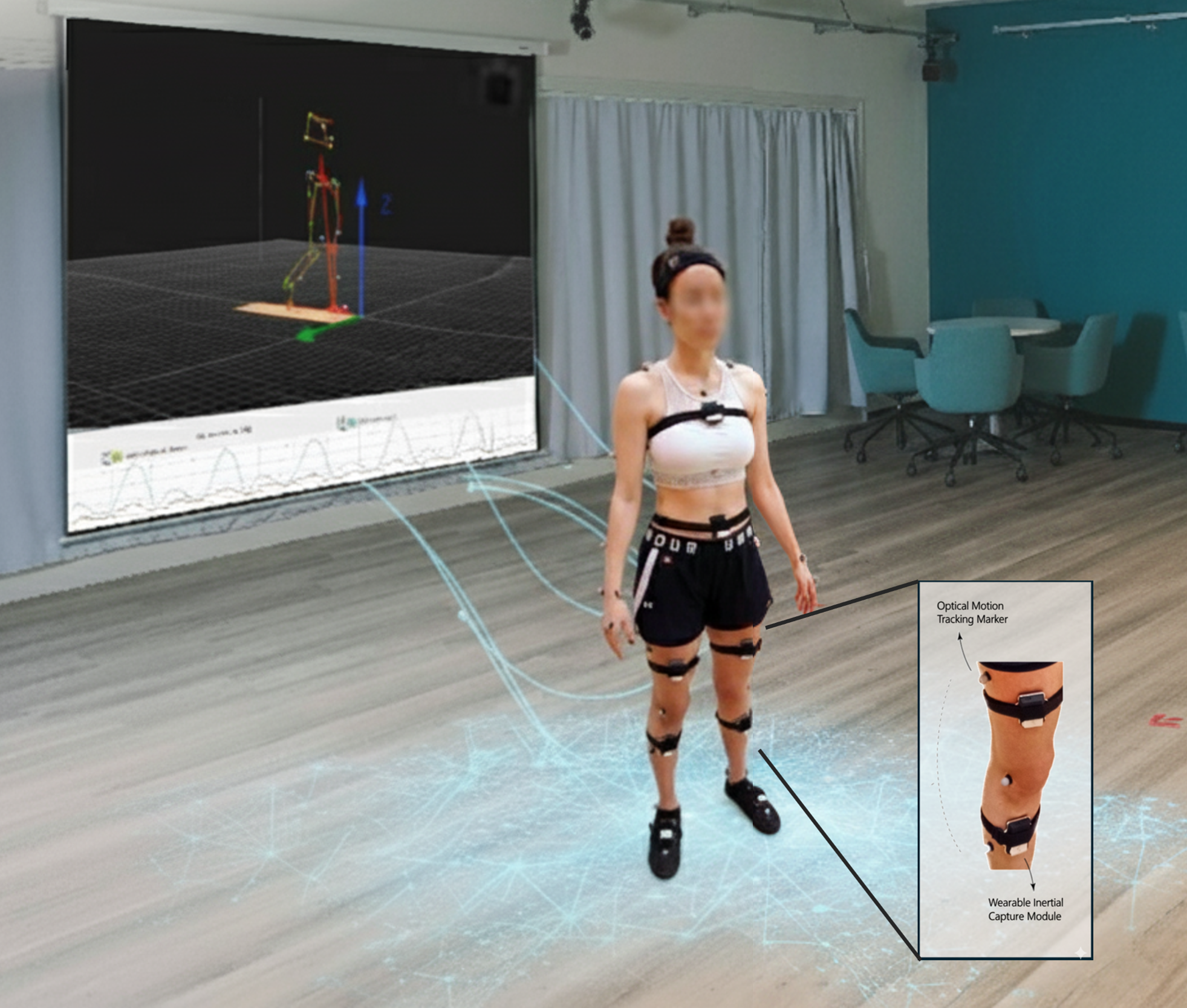
We collected synchronized wearable IMU data together with laboratory ground truth kinetics from optical motion capture and force plate measurements during treadmill and overground walking. Healthy participants were used to develop and validate the core modeling framework. Clinical cohorts including post total knee arthroplasty participants were used to evaluate feasibility in populations with asymmetric gait patterns. Patients are recruited and followed at Rambam Medical Center in close collaboration with Dr. Peskin and Dr. Ghrayeb, including joint work on recruitment, retention, patient progression, and gait analysis. This partnership combines clinical expertise with our novel technology and data analysis approaches, strengthening the clinical relevance of the study and supporting translation of findings into improved patient care.
Research results
We developed a wearable only deep learning framework to estimate knee adduction moment and knee flexion moment from multi sensor IMU recordings across treadmill and overground walking. In Sabaty et al., we introduced a model that combines an LSTM based autoencoder with a Variational Gaussian Process to estimate both knee moments and uncertainty. The model achieved low error across walking environments and outperformed existing approaches while providing uncertainty quantification, a key feature for interpretation and clinical deployment. This work demonstrates that clinically meaningful gait kinetics can be estimated outside the biomechanics lab using wearable sensors, enabling scalable monitoring of joint loading in natural settings.
In complementary work, we extended wearable knee moment estimation toward clinical translation by evaluating machine learning approaches in healthy and post total knee arthroplasty participants, supporting feasibility in a population where asymmetry and compensatory strategies are common. Together, these results provide a foundation for continuous monitoring of knee loading, early identification of maladaptive mechanics, and individualized rehabilitation pathways.
Publications
- Sabaty, A., Fishman, A., Batcir, S., Tan, T., Shull, P. B., Levy, K., & Fischer, A. G. (2026). Novel deep learning model to estimate knee flexion and adduction moments with wearable IMUs during treadmill and overground walking. IEEE Journal of Biomedical and Health Informatics, 30(1), 173–183. https://doi.org/10.1109/JBHI.2025.3584389(opens in new tab)
- Fishman, A., Sabaty, A., Ghrayeb, N., Peskin, B., Levi, K., & Fischer, A. G. (2024). Machine learning for knee moment estimation in healthy and post total knee arthroplasty participants using wearable sensors. Osteoarthritis and Cartilage, 32(Suppl. 1), S145–S146. https://doi.org/10.1016/j.joca.2024.02.206(opens in new tab)
- Yona, T., Peskin, B., & Fischer, A. G. (2025). Lower limb kinematic changes during stair navigation 3 and 5 months after anterior cruciate ligament reconstruction: A longitudinal analysis in real-world settings. PM&R, 17(6), 663–672. https://doi.org/10.1002/pmrj.13342(opens in new tab)
- Yona, T., Peskin, B., & Fischer, A. G. (2025). Out-of-laboratory longitudinal gait assessment of participants before and after anterior cruciate ligament reconstruction surgery: An observational longitudinal study. Journal of Athletic Training. https://doi.org/10.4085/1062-6050-0423.24(opens in new tab)