




Developing advanced tools to track and predict birth weight
Prof. Ron Beloosesky, MD, Rambam; Einat Borohovich, MA, Senior Data Scientist at TERA, Rambam
Accurate birth weight prediction is critical for obstetric decision-making, influencing delivery timing, mode of delivery, and neonatal resource preparation. Current clinical practice relies on ultrasound-based fetal weight estimation and population-based growth charts, both applying uniform thresholds regardless of individual patient characteristics. This approach creates two distinct clinical problems: first, misclassifying constitutionally small fetuses as growth-restricted when they are appropriately small due to parental genetic factors, and second, missing fetuses with true pathological growth restriction who appear normal by population standards but are growing below their individual genetic potential.
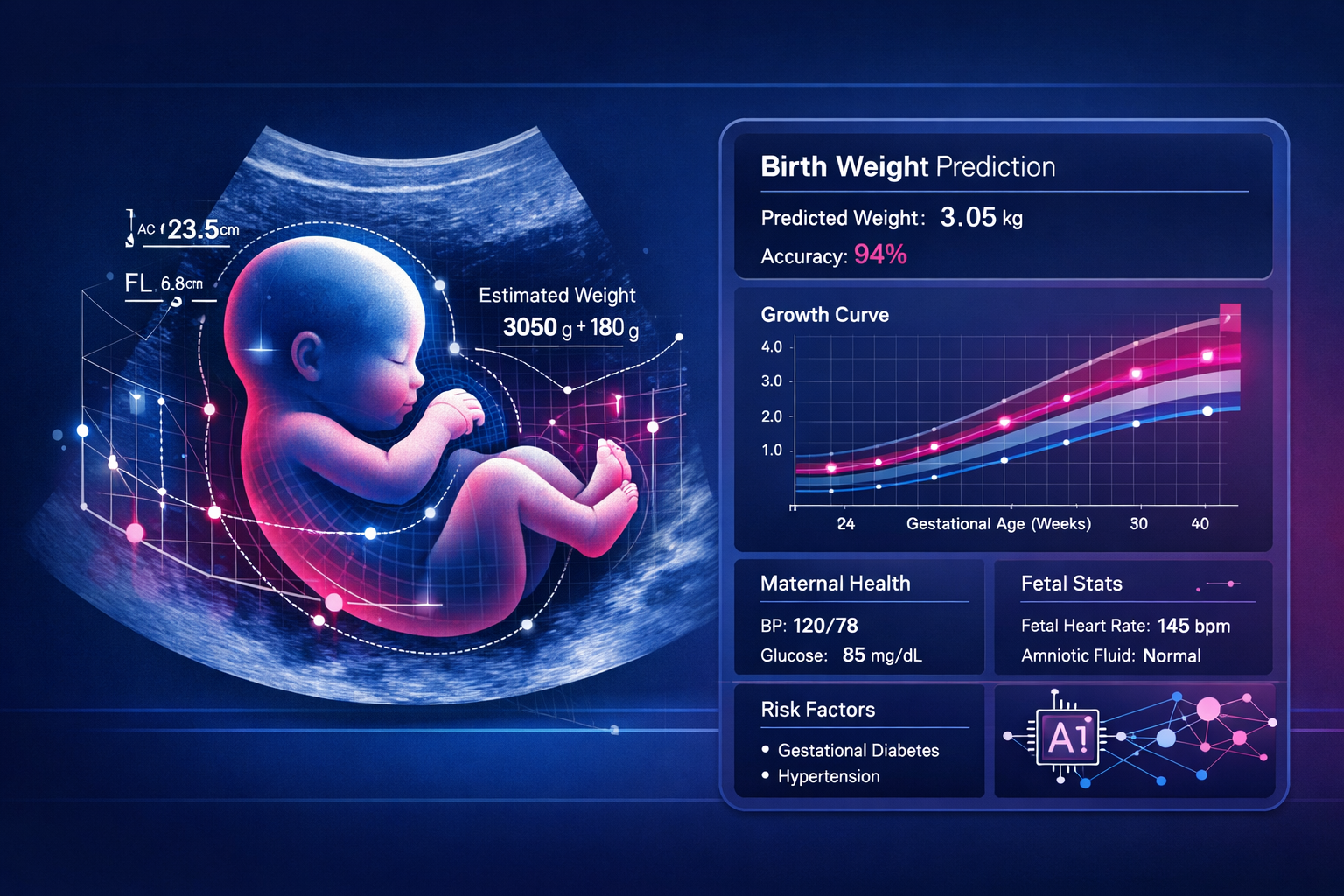
We developed an AI-based birth weight prediction model using a linear mixed model with random intercept. The model was trained on 28,629 births from 11,453 multiparous women with consecutive births at Rambam Health Care Campus, collected between 2005-2021. Fixed effects capture population-level relationships between maternal and pregnancy characteristics and birth weight, while random effects derived from previous birth weights enable personalized predictions based on individual maternal genetic potential.